SOC HTB - Section 11: JavaScript Deobfuscation
SOC HTB - Section 11: JavaScript Deobfuscation
Obfuscation
Code Obfuscation
- Obfuscation is a technique to re-write the code in a way that make a script more difficult to read by humans but allows it to function the same from a technical point of view, though performance may be slower.
- A common obfuscation technique involves breaking the code into individual words and assigning numbers to them (creating a dictionary). Then, the words in the code are replaced with these numbers so that others cannot understand it. When executed, the system automatically pieces the numbers back together into a text string containing the original code.
- The
eval()function: In JavaScript, its job is to take the text string that was just pieced together and turn it into actual code, forcing the computer to run it. - Example: You have the original code:
alert("Hi")- Step 1: Create a dictionary.
0 = alert,1 = "Hi" - Step 2: Hide the code. The encoded string will be:
alert("Hi")→0(1) - Step 3: Reverse the process. The computer looks up the dictionary and translates
0(1)back into text:"alert('Hi')" - Step 4: Execute. The command
eval("alert('Hi')")receives this text, turns it into a real command, and displays the “Hi” dialog box on the screen.
- Step 1: Create a dictionary.
- The
[https://beautifytools.com/javascript-obfuscator.php]
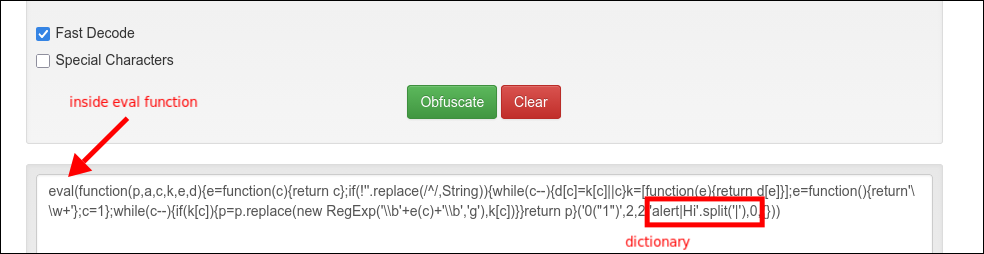
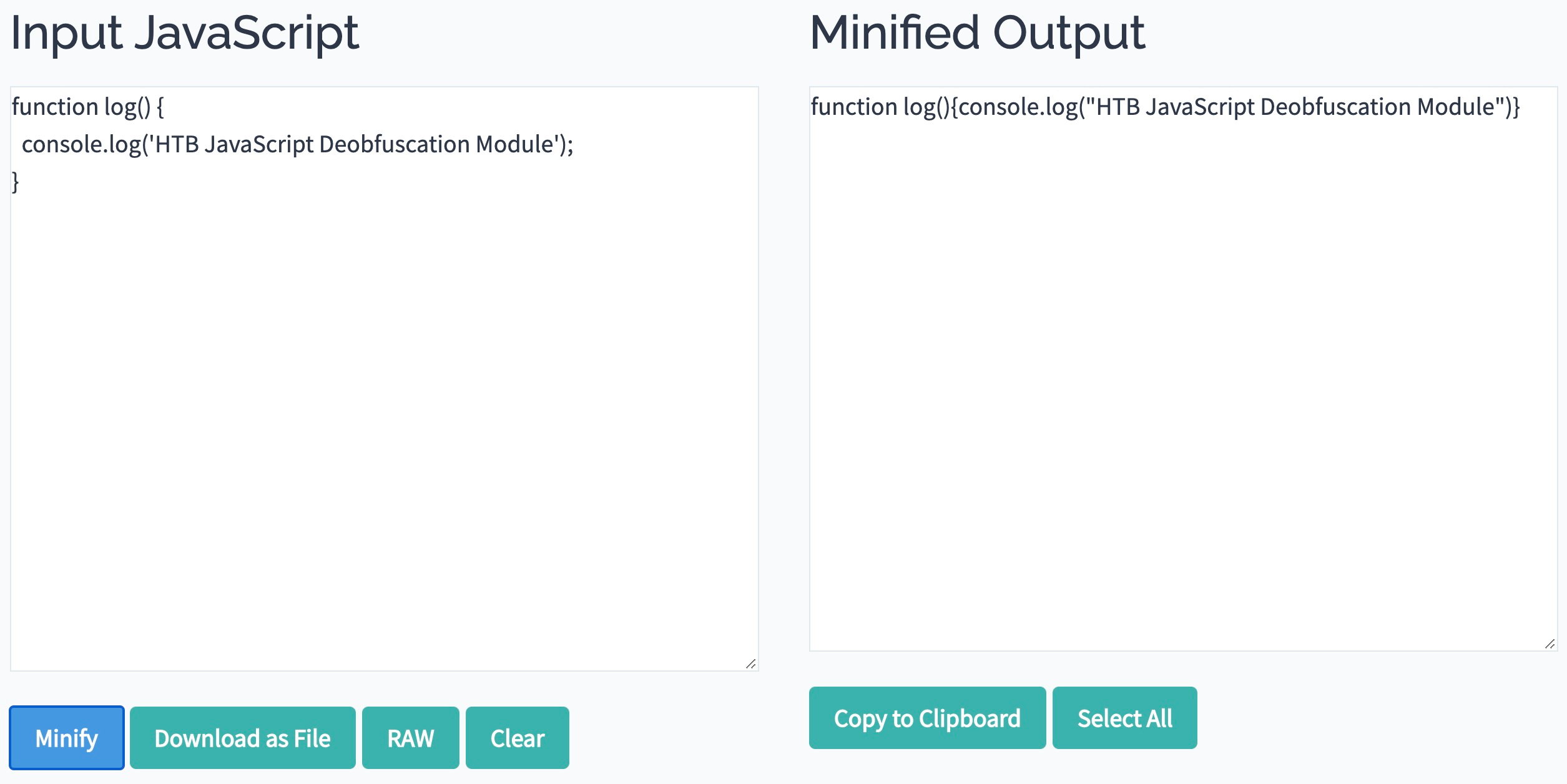
- Another type of obfuscation is code minification, means having the entire code in a single (often very long) line, Usually, minified JavaScript code is saved with the extension
.min.js
[https://www.toptal.com/developers/javascript-minifier]
Advanced Obfuscation


Deobfuscation
Beautify
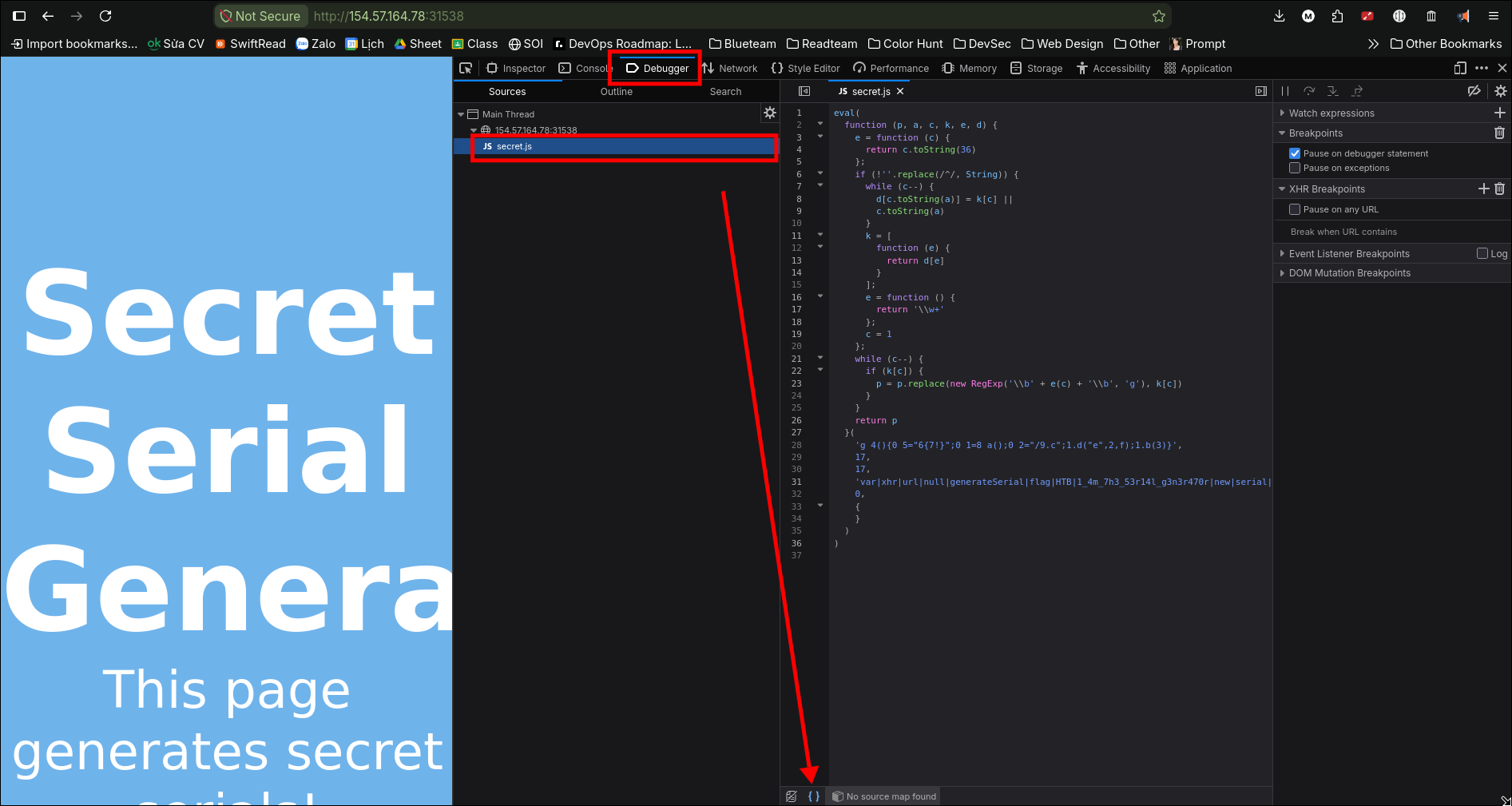
Deobfuscate
[https://matthewfl.com/unPacker.html]
- Some script use method of obfuscation is packing. Another way of unpacking such code is to find the return value at the end and use console.log to print it instead of executing it.
Reverse Engineering
- We would need to manually reverse engineer the code to understand how it was obfuscated and its functionality for harder cases
This post is licensed under CC BY 4.0 by the author.